Taking and passing a subject-specific TExES exam is a requirement for TExES certification in Texas. For those who want to teach Health, the necessary exam is the TExES Health EC-12 (157). This test is for aspiring Health teachers across all grade levels, ranging from early childhood (EC) to 12th grade (12); passing this exam will allow test-takers to be certified to teach Health in any primary or secondary school classroom in Texas.
Like most other TExES tests, the TExES 157 Health EC-12 exam is taken at a testing center of the candidate's choice. The TExES exam tests a mixture of theoretical and practical knowledge, ranging from the basics of human physiology to the practice of communicating health information to students.
In this article, we'll explore this health certification test, covering everything from formatting to registration to test content. We will also take a look at how are TExES exams scored and how test-takers can build an excellent study guide. When it comes to test prep, planning is key. This article is designed to help candidates walk into the testing center with confidence and walk out with a passing score.
TExES registration for the Health EC-12 is completed via an online portal. Candidates should visit the Texas Educator Certification Examination Program official website and navigate to "Health EC-12" to start the registration process. The TExES exam cost is $116, although additional processing fees may be assessed during checkout.
Testing location and a test date can be chosen as part of registration. Fortunately, test centers are located all across the state of Texas and around the United States. There are also many dates to choose from, as the exams are conducted year-round.
Accommodations are available for nursing mothers, those with disabilities, and those with health-related needs as long as candidates submit a special accommodations form. Requests should be made as soon as possible to give the reviewing committee enough time to process the request.
If a test-taker does not pass the exam, the Texas Education Agency allows for four retakes. The TExES exam retake policy states that retake attempts must be made no less than 30 days after the candidate's most recent exam. Each retake will cost $116 (the fee for the exam).
Get a personalized test prep course for the TExES Health EC-12.
Take an assessment and focus on the areas that need the most practice.
The TExES Health EC-12 is a computer-administered test (CAT), meaning it is taken entirely on computers located at a TExES testing centers. The exam consists of 100 selected-choice questions; there are no essay prompts (handwritten or on-screen) and no other type of constructed response questions. Candidates will only need to read the question and then select from a list of possible answer choices.
Test-takers will have 5 hours to complete the exam, the first 15 minutes of which consists of a CAT tutorial and a compliance agreement. Breaks may be taken during the remaining 4 hrs and 45 minutes, but the exam time clock will not stop.
Candidates must score at least a 240 on the exam to pass. This represents a scaled score (as opposed to a raw score), but test-takers will still need to get a large majority of the questions on the exam correct to achieve it.
Candidates will receive their TExES exam results within 7 to 10 days of taking the exam. Score reports can be found in the Educator Certification Online System (ECOS) account, which is accessed via the Texas Education Agency login. If the exam attempt resulted in a passing score, candidates may also apply for certification directly from their ECOS account.
TExES Health EC-12 Content
Content on the TExES Health EC-12 is broken up into five broad knowledge categories, otherwise known as 'domains':
Personal Health (26% of exam content)
Healthy Interpersonal Relationships (20% of exam content)
Community and Environmental Health and Safety (20% of exam content)
Health-Related Skills and Resources (20% of exam content)
The School Health Education Program (14% of exam content)
The material contained in these domains is further broken down into competencies. We will summarize the content of these competencies in the following sections:
Domain I: Personal Health
Personal health forms the basis of Health education. As such, the competencies here are focused on the factors that affect everyday personal health like human body systems and development, nutrition and physical fitness, physical diseases and disorders, and the effect of mental health on personal wellness. Candidates are expected to understand the differences between communicable and non-communicable diseases, as well as how relationships and lifestyle play into one's overall health. This domain makes up 26% of the exam material (26 questions).
Domain II: Healthy Interpersonal Relationships
Healthy Interpersonal Relationships contributes 20% to the overall exam, which breaks down to around 20 questions. This domain is geared towards the social aspects of health including family relationships, healthy ways of interacting with one another, and the role of human sexuality in health. Test-takers should be prepared to answer questions on how to promote good communication skills and how to help students solve problems that may arise in their families (e.g. divorces, abuse, neglect, and significant conflict).
Domain III: Community and Environmental Health and Safety
The third domain on the TExES Health EC-12 deals with the basic concepts of safety and constitutes 20% of the exam (20 questions). Candidates must be knowledgeable on situational awareness and able to identify common safety hazards that present themselves in daily life. CPR and other first-aid procedures may appear, as well as how drugs, alcohol, and tobacco affect one's health and how to encourage students to avoid them. Finally, candidates should be aware of community health issues such as access to insurance, government health programs, and how socioeconomic background can affect one's health.
Domain IV: Health-Related Skills and Resources
Inspiring and equipping students to take action is a vital part of being a Health teacher. The fourth domain test one's knowledge of health decision-making skills, sources of health-related information, and health-related products. The main emphasis tests on understanding how these factors play into a person's everyday health, and how people can be empowered to make decisions that will contribute to better health. This domain makes up 20% of the exam - approximately 20 questions.
Domain V: The School Health Education Program
The fifth domain of the Texas health certification exam focuses on the practicalities of running a school health program. It contributes 14% of the overall exam material (around 14 questions). Although it is the smallest domain, it still plays a highly-important role in one's success as a Health educator. It's focus is on the principles of health education itself, such as designing and implementing health curriculum, communicating health concepts to students, and understanding the role of the Health teacher in the school and in students' lives.
Watch concise and engaging video lessons that help with TExES Health EC-12 prep.
Master concepts quickly with clips from expert instructors
You get both video lessons and test transcripts
Save time by quickly reviewing video transcripts for essential lesson information
With 100 questions spread out over nearly 5 hours of testing time, this exam contains a lot of material. Candidates often find the greatest success by developing a good TExES Health EC-12 study guide and breaking down their preparation into manageable chunks. Here are a few study tips:
Understand what the exam covers: before crafting a study plan, candidates should thoroughly make sure they understand the domains and competencies of what the test covers.
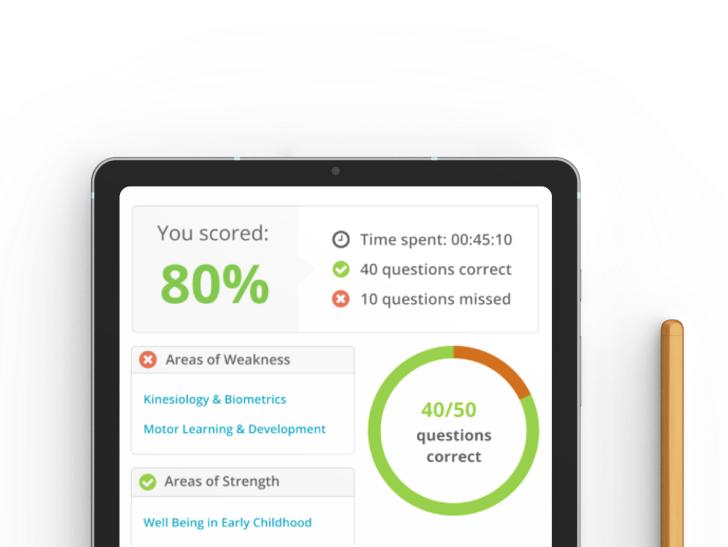
Assess understanding of the content: identify strengths and weaknesses and build a study plan that covers the candidate's weaker areas.
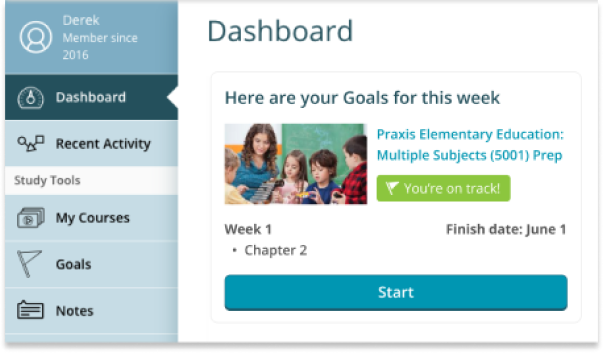
Develop a study guide and set measurable goals: a strong TExES Health EC-12 study guide helps candidates to remain focused and set measurable knowledge goals.
Practice good test-taking strategies: several times during the preparation stage, candidates often find success in refining their test-taking skills. A TExES Health EC-12 Practice Test simulate the timing and structure of the real thing and can be used to help modify study guides.
TExES Health EC-12 Study Guide
During TExES preparation for this exam, a good TExES Health EC-12 study guide helps give structure to test prep, allowing candidates to keep track of what they've covered and what content still needs review.
Candidates may want to look back over past courses and experiences to help assess their strengths and weaknesses. Good-quality study guides often factor in one's existing knowledge base, connecting test material with previous education.
TExES Health EC-12 Practice Test
TExES Health EC-12 practice tests are a must and are available online and in print, oftentimes for free. Practice tests have the unique advantage of accomplishing several tasks at once. They help candidates to fully engage with the exam material, which speeds up learning and knowledge development. They also allow candidates to practice good test-taking skills and serve as a sort of litmus test for measuring learning progress.
Supplement a good TExES Health EC-12 study guide with regular and routine practice tests. Using both in concert can lift test preparation to the next level.
Find self-paced TExES Health EC-12 prep courses.
Find a study plan that can get you ready for your certification exam, whether you have six months or six days.
Amy Mayers, M.Ed. has taught middle school math for over 7 years. She is a Texas certified teacher for grades 4-12 in mathematics and has passed the TExES Math 4-8 and the TExES Math 7-12. Amy graduated with a B.S. in Mathematical Sciences from the University of Houston and a Master's degree in Curriculum and Instruction from the University of St. Thomas.
Frequently Asked Questions
What can I teach with health EC-12?
Health EC-12 certification allows one to teach Health at any level from early childhood through high school. Fitness, sports, and recreation classes at all levels are also solid options. Additionally, a health certification can open the doors to coaching opportunities for a variety of different athletic activities.
What is health EC-12?
Health EC-12 simply refers to Health from early childhood (EC) to 12th grade (12). The TExES 157 Health EC-12 exam is the certification test to become certified in this subject. Once certified, teachers can teach Health and Health-related topics at any education level from preschool to high school.